Chasing the Breeze
ABOUT THIS ARTWORK
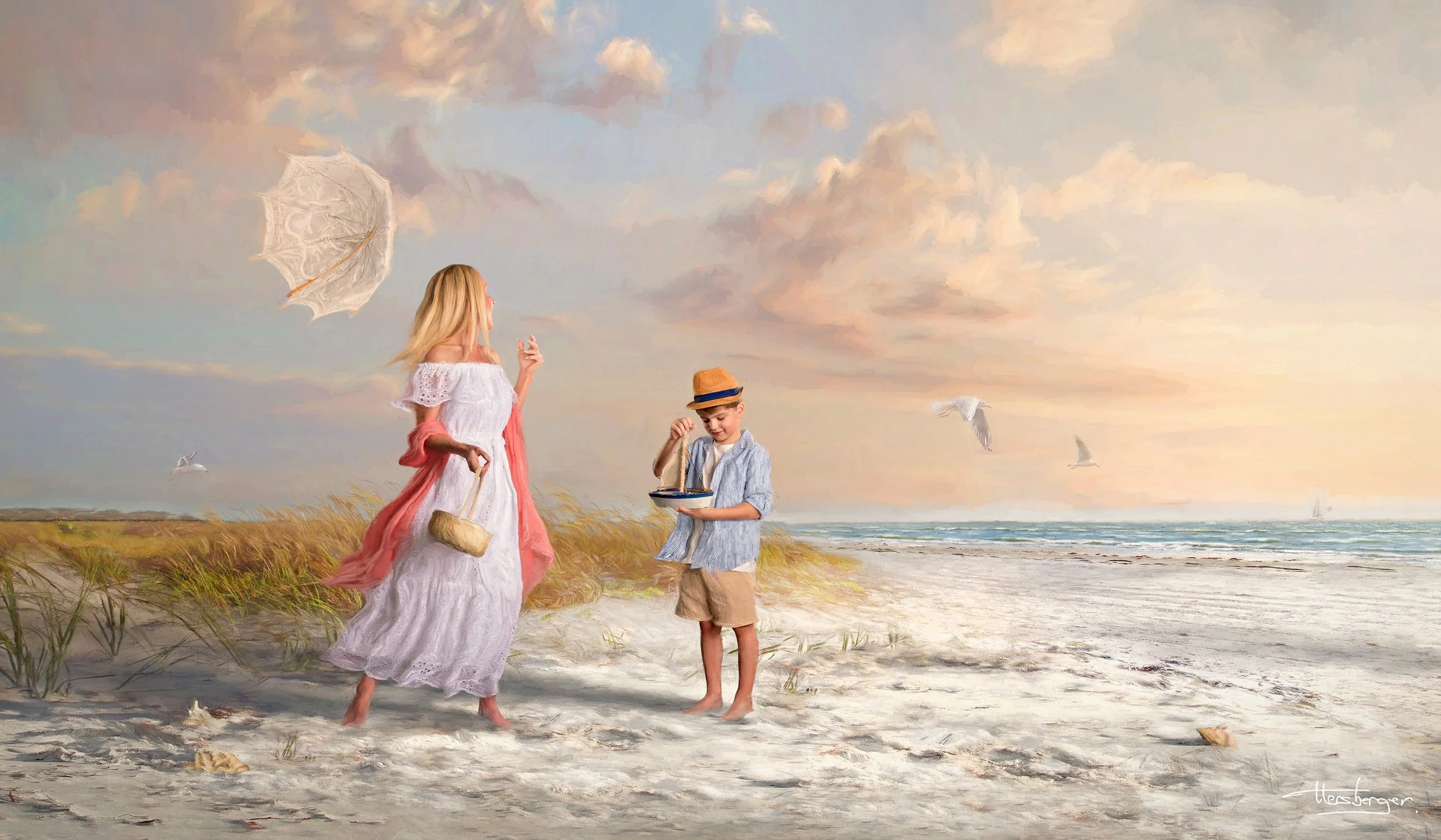
Chasing the Breeze is inspired by the beautifully chaotic life of a mother, always in motion, always reaching for the next thing. The endless rhythm of caring, carrying, organizing, and showing up… from morning routines to the next soccer practice.
And yet, in the middle of all that movement, something magical is being created.
While she’s chasing time, her child is simply chasing wonder.
The drifting parasol, the wind in motion, the softness of the moment, it all reflects that quiet truth: behind every carefree childhood is someone working tirelessly to make it feel effortless.
This piece is a tribute to that unseen devotion—where love looks like constant motion, and the reward is a childhood filled with lightness, joy, and imagination.
THE MAKING OF A MASTERPIECE
Behind all that ease is a lot of intention.
This kind of softness doesn’t happen by accident. It started with a strong foundation—mapping out light and shadow first—before gradually building color in layers. That’s where the magic comes in: thin glazes that give the sky its glow and let the light feel like it’s actually moving through the air.
Edges are handled with real finesse. The figures are just defined enough to hold your attention, while everything else gently dissolves into atmosphere. Nothing feels overworked. Even the movement—the scarf, the parasol—feels suggested rather than forced, which is much harder to pull off than it looks.
And the color palette? Calm, sun-washed, and beautifully restrained. It keeps everything in harmony while letting the moment breathe.
WHY THIS IS A MASTERPIECE
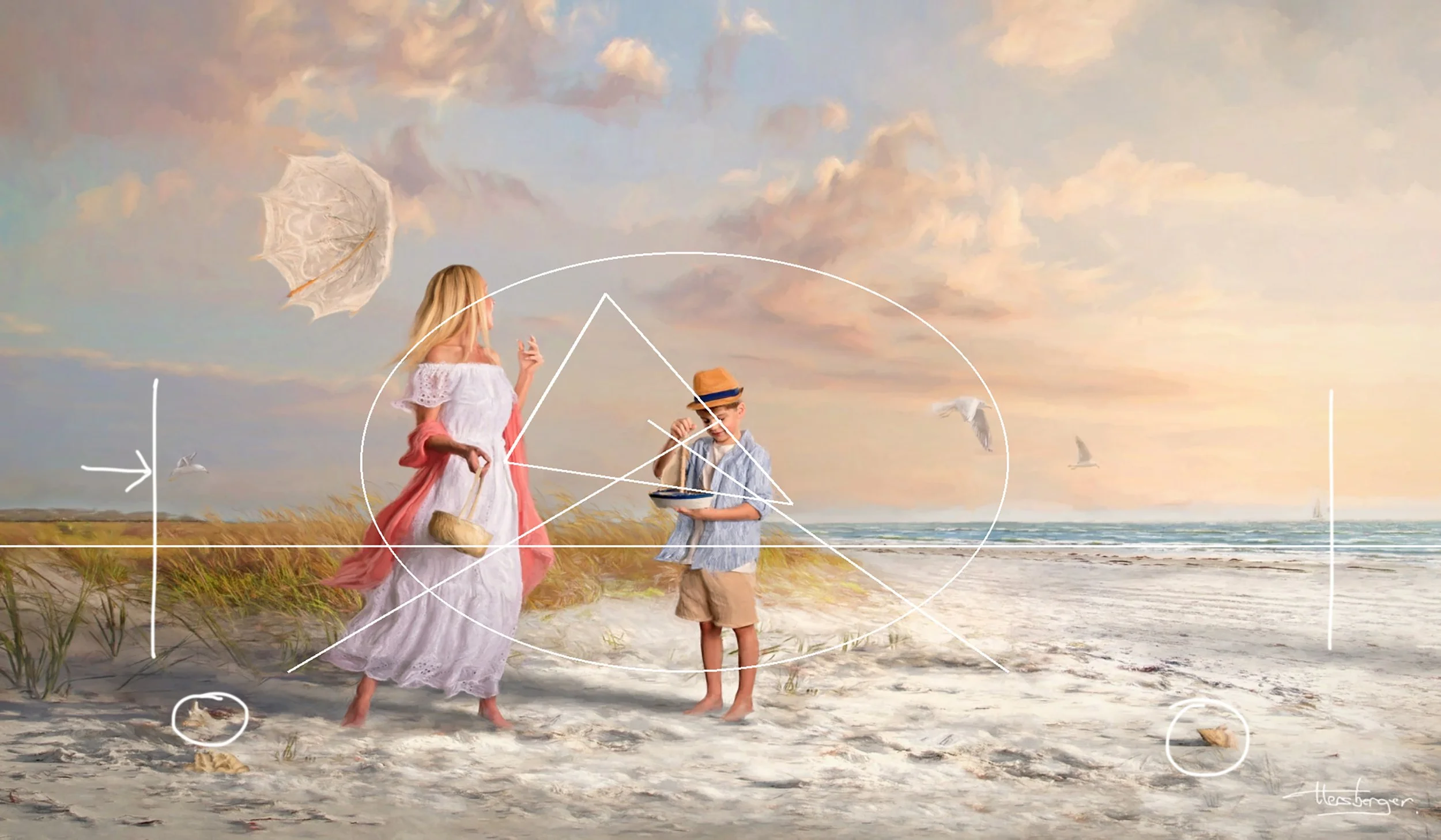
The geometry is there, you just don’t see it at first.
There’s a subtle triangle connecting the mother, child, and parasol. It anchors the composition, even as everything else feels in motion.
The diagonal lines—from the wind-blown scarf to the grasses—add energy and guide your eye across the scene.
The horizon sits low, giving all that space to the sky, which makes the moment feel open, almost limitless.
And then there’s this gentle circular flow—your eye moves from the child, to the mother, up to the parasol, and back again without even realizing it.
All of it works quietly in the background, holding everything together.
This painting doesn’t try too hard, and that’s exactly why it works.
It captures something fleeting, something light, something real… and lets it linger just long enough.
The technique is there, doing all the heavy lifting, but it steps aside so you can simply feel the moment.
And honestly, that’s the kind of mastery you don’t forget.